
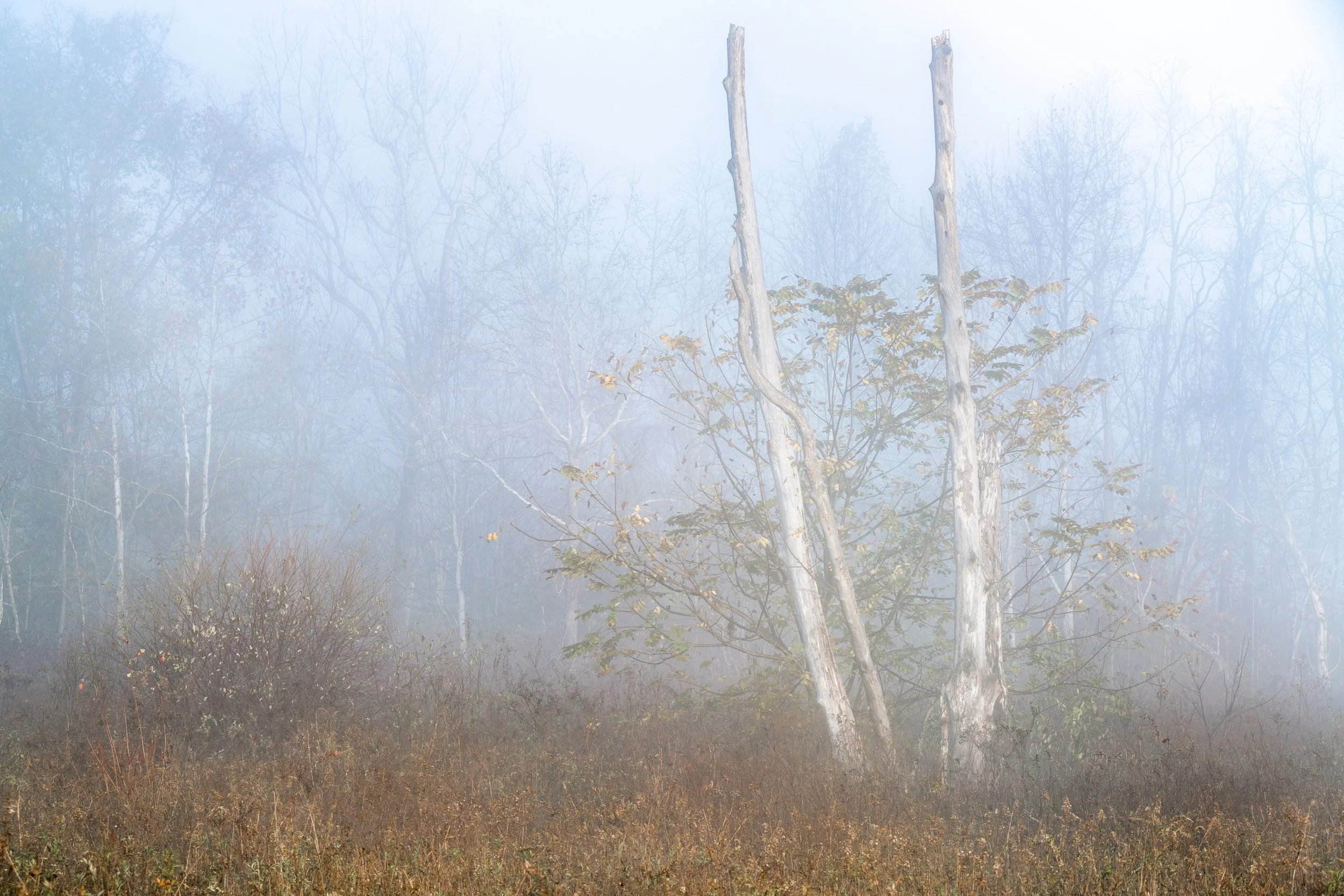
This fall marked my ninth annual fall photography trip to Great Smoky Mountains National Park. This year, I visited slightly later than usual, spending the first week of November chasing fall colors. Over the years, I've noticed that the color change seems to be occurring later and later. Peak color typically begins at the highest elevations before gradually working its way down into the valleys. I try to time my visits so that I can photograph different areas of the park at various stages of the color change, but that's easier said than done when so much depends on the weather.
On this trip, I started on the western North Carolina side of the park before eventually making my way into eastern Tennessee. I typically spend my first day scouting fall colors at various elevations. Whenever I come across an area with particularly good color, I'll ask Siri for my current elevation to help gauge what I might expect at some of my favorite locations. It's a simple method that helps me plan where to spend my time over the following days.
Although my main goal was to photograph fall foliage, I ironically spent much of this trip photographing trees that were already bare or had very few leaves remaining. I often use a telephoto lens to isolate individual subjects within the larger landscape, searching for abstract shapes, interesting textures, and contrasting or complementary colors. Finding these less obvious compositions is one of the things I enjoy most about landscape photography. Rather than photographing the entire scene, I look for smaller details that might otherwise go unnoticed.
Finding Beauty Beyond the Fall Colors
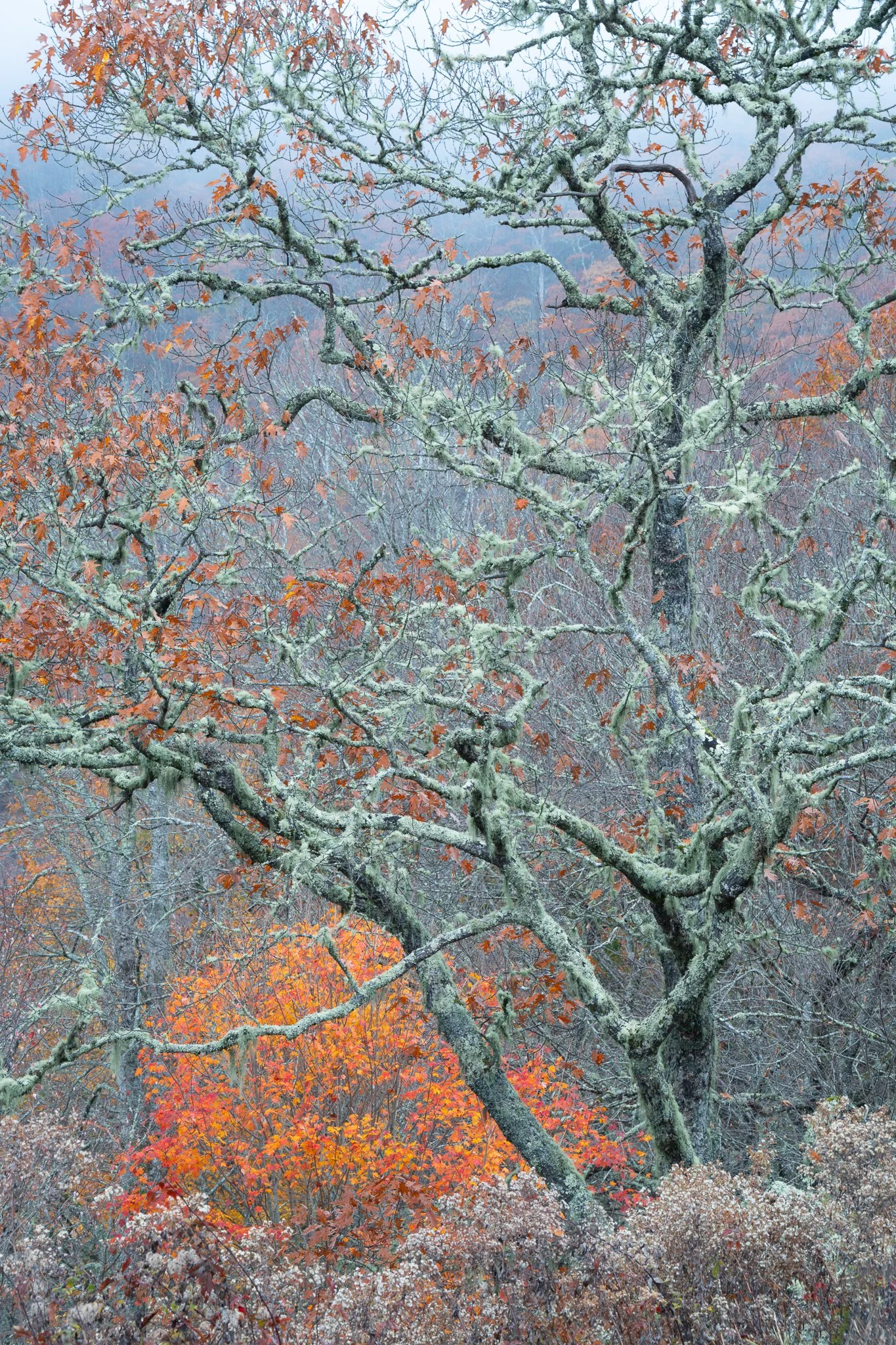
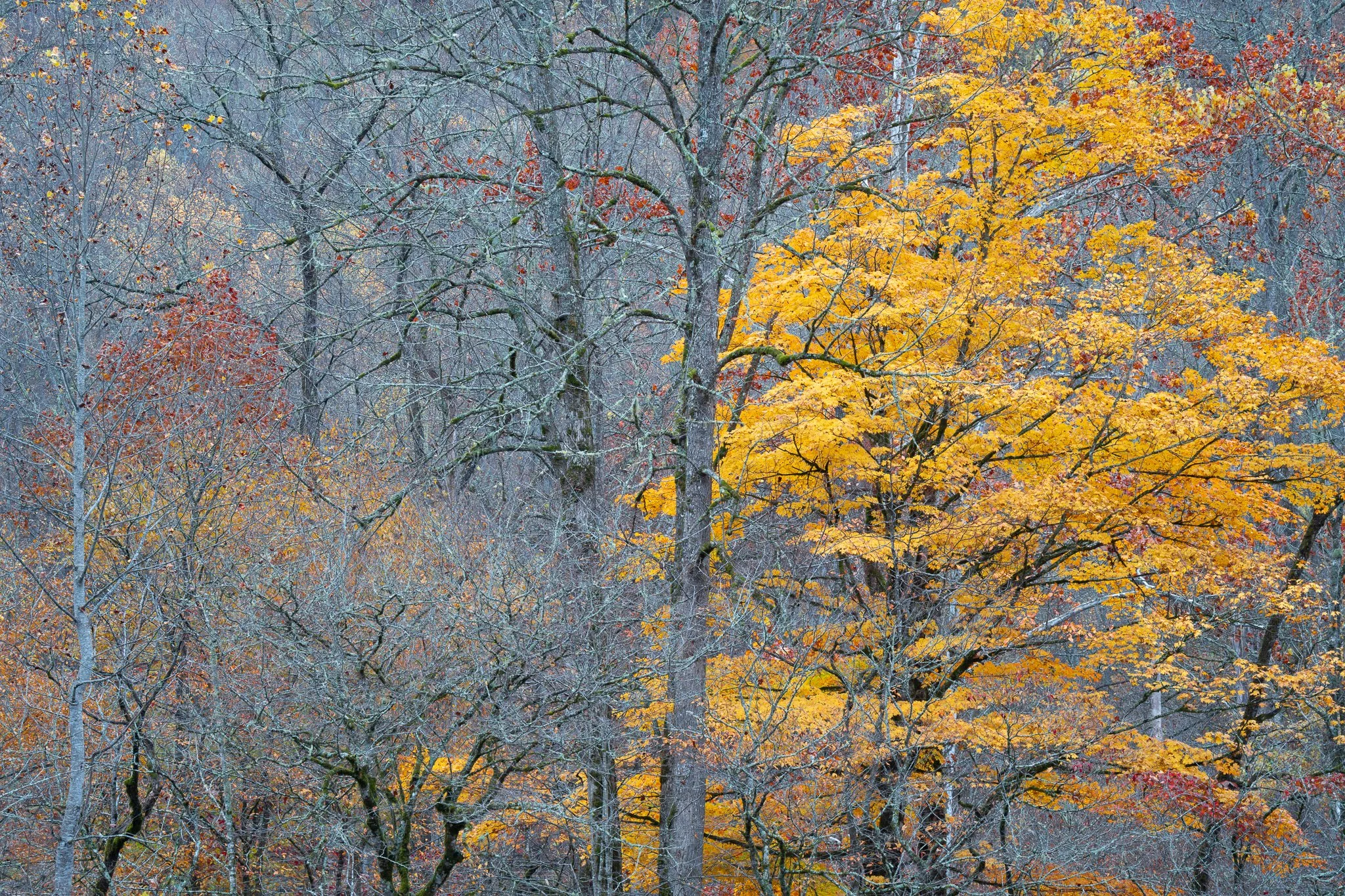
This approach helped me create one of my favorite photographs from the trip (below). It's a tree that I've always found interesting, but in the past, its uniqueness never quite translated into a photograph. This time, looking at the scene through a telephoto lens, I found that isolating certain elements created a much stronger composition.
At this elevation, the foliage was mostly past peak color, with much of it already gone due to wind. This scene, just off the Blue Ridge Parkway, had nearly everything I look for in a photograph: complementary colors, cool tones, interesting textures, and just enough remaining foliage to reveal the abstract shapes and twisted branches. A little fog helped soften the background and separate the tree from its surroundings.
What I particularly like about this image is that it doesn't necessarily say "Smoky Mountains." It could have been photographed in many high-elevation areas throughout the country. For me, it's more about the shapes, colors, and textures than the location itself.
Off the Blue Ridge Parkway
Two of my other favorite images came from a much lower elevation, around 1,800 feet, although these trees were also mostly bare.
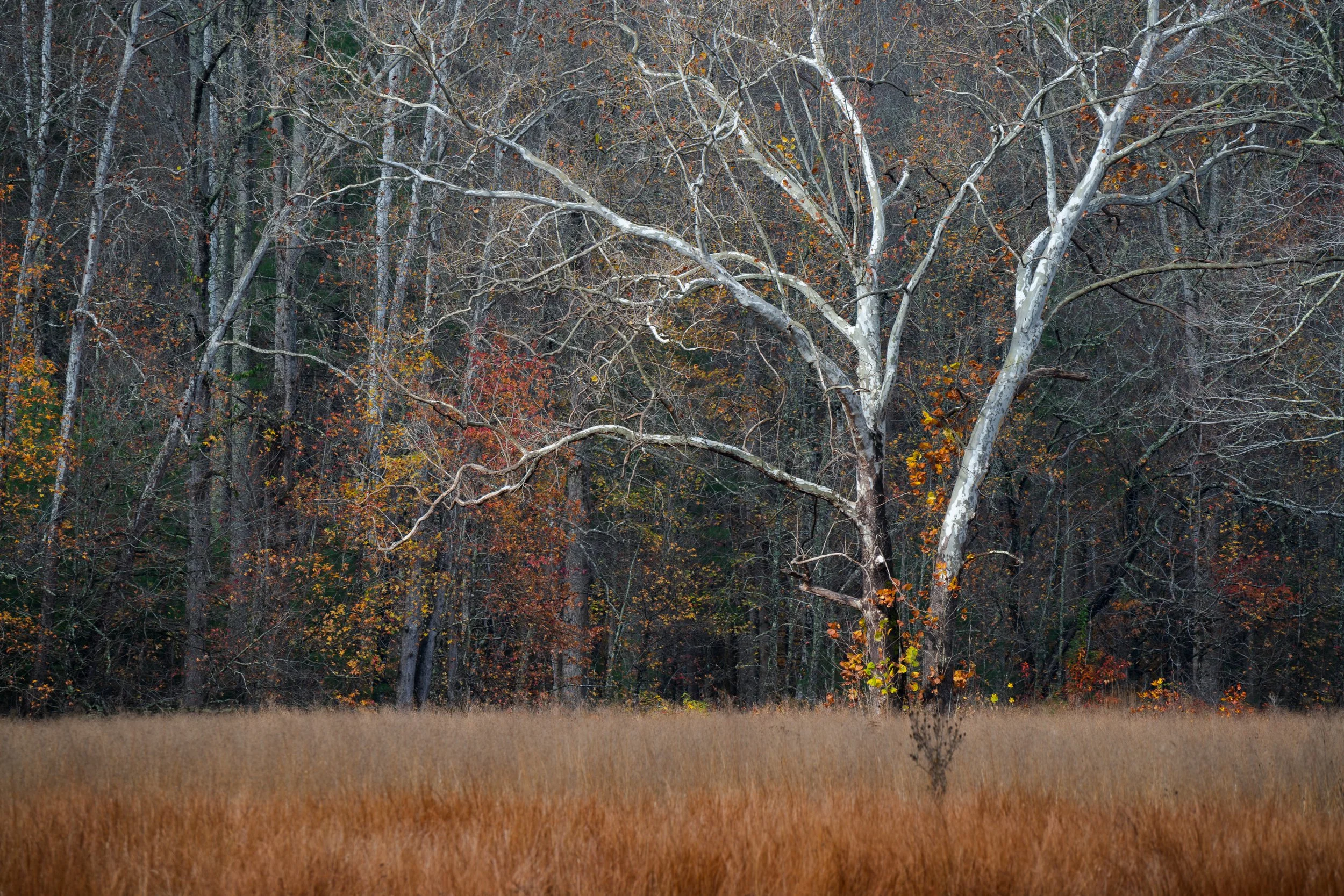
The first was a tree I've photographed before under different conditions and one that I'm always drawn to. It's a tree that most people probably wouldn't even notice, and during much of the year, it may blend into the surrounding landscape.
The bright white bark of its limbs contrasted nicely with the darker background, while a little remaining fall color added some interest to the scene. A carpet of warm grasses leading toward the tree complemented the warmer tones in the background, giving the image a rustic feel.
“Autumn’s Embrace”
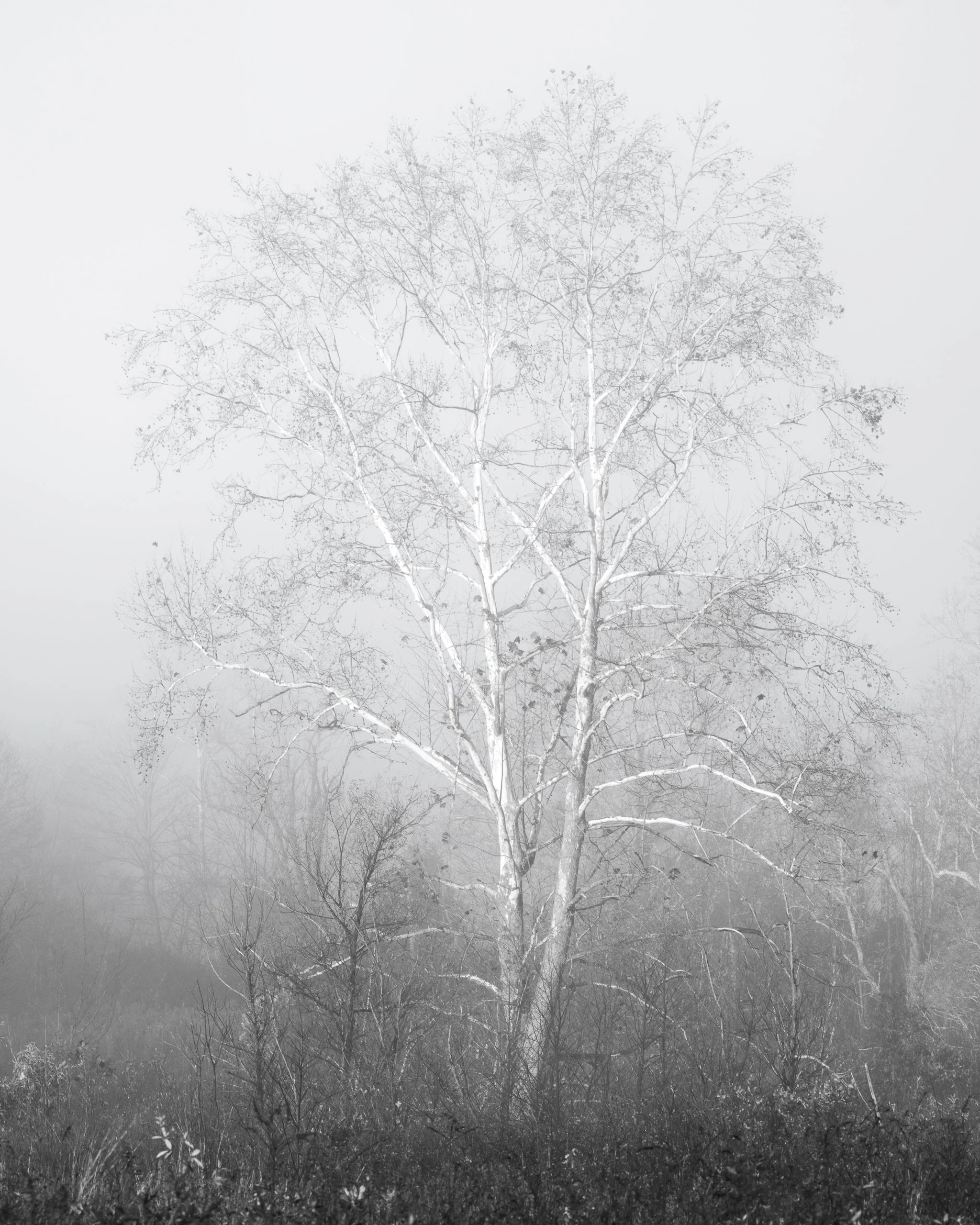
Not far from this tree was another similar subject that I had the opportunity to photograph during a morning of dense fog. With the tree already bare and the fog creating such a soft, muted palette, I knew right away that I wanted to convert the image to black and white.
For this composition, it was all about the contrast between the white limbs and the darker, minimal foliage. The fog helped simplify the background and isolate the tree, creating a scene that would normally be lost among the surrounding vegetation.
“Ghost in the Mist”
Wildlife in the Landscape
Another tree that caught my attention was an American sycamore that I've photographed several times before, including during snowy conditions.
I made several compositions of this tree, including wider views showing the entire tree and others with elk grazing beneath it. However, my favorite image was a tighter composition showing only a section of the tree. Once again, it was the bright white limbs, unique shapes, and contrasting colors that caught my attention.
There were probably around 18 elk grazing in the field that morning. Before long, more and more people began stopping along the road to photograph them. While everyone else was aiming their cameras toward the elk, I was pointing mine up into the tree.
I think some people probably thought I was crazy, or maybe just couldn't see the elk. I often get asked, "Do you see a bear up there?" When I tell them I'm actually photographing the tree, they usually walk away looking a little disappointed.
Maybe I'm one of the few people who appreciates the uniqueness of these trees!
The wider scene with the elk was certainly worth photographing, but I found the abstract shapes of the sycamore's white limbs against the colorful background even more interesting. Both images show the same location, but the tighter composition better represents what originally caught my attention.
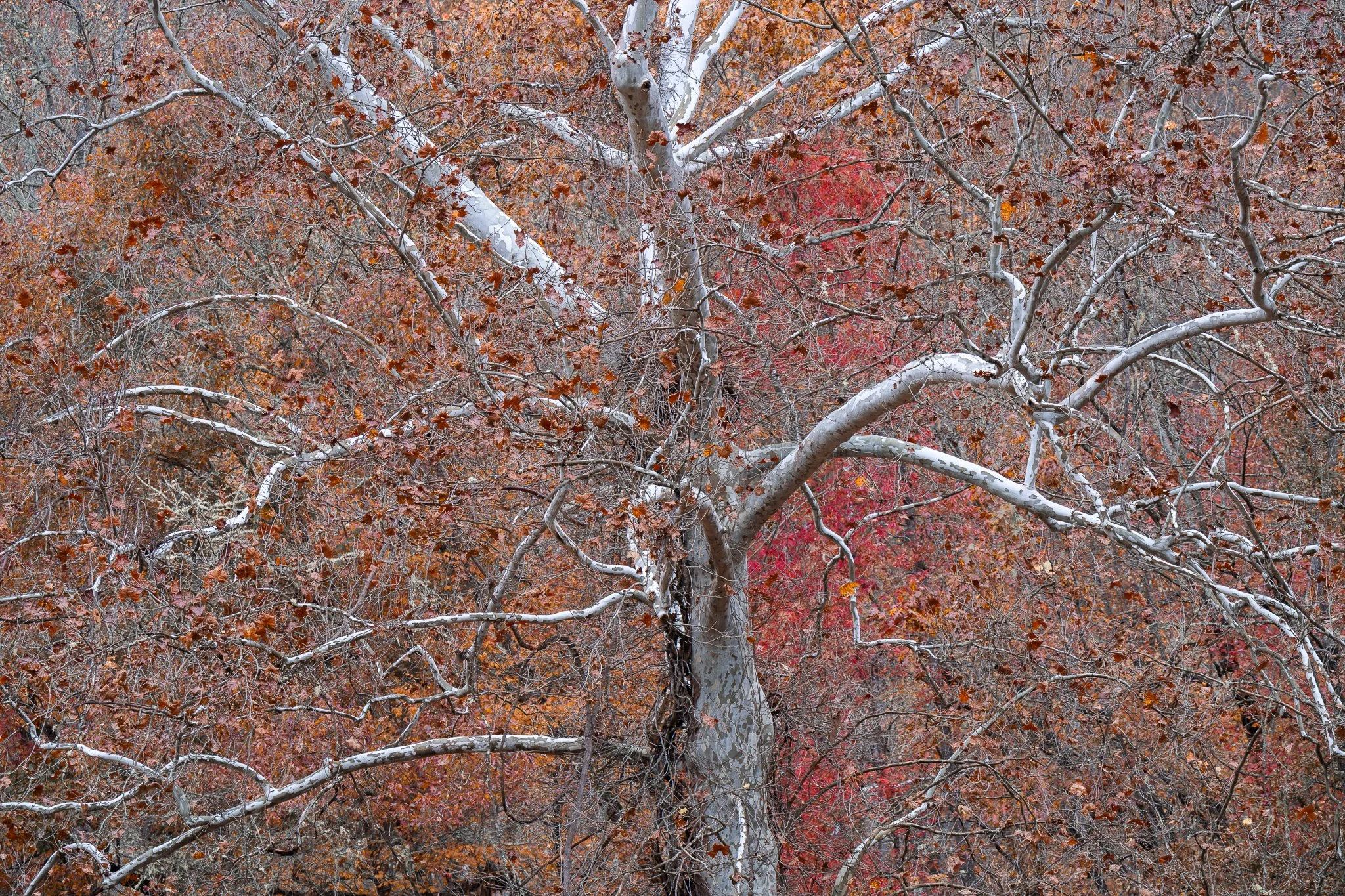
American Sycamore
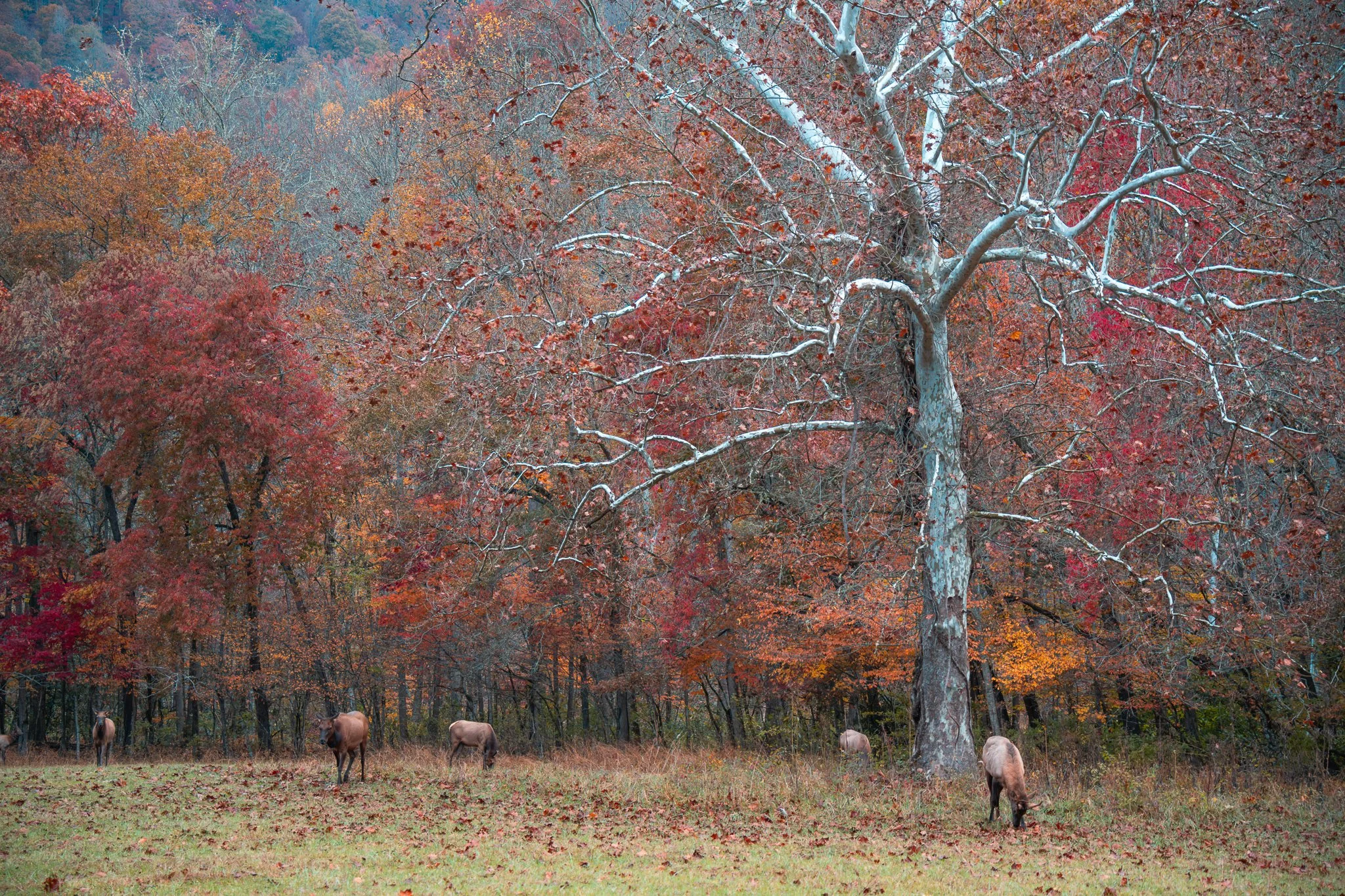
Elk under the Sycamore
Of course, a trip to the Smokies wouldn't be complete without photographing some wildlife and waterfalls.
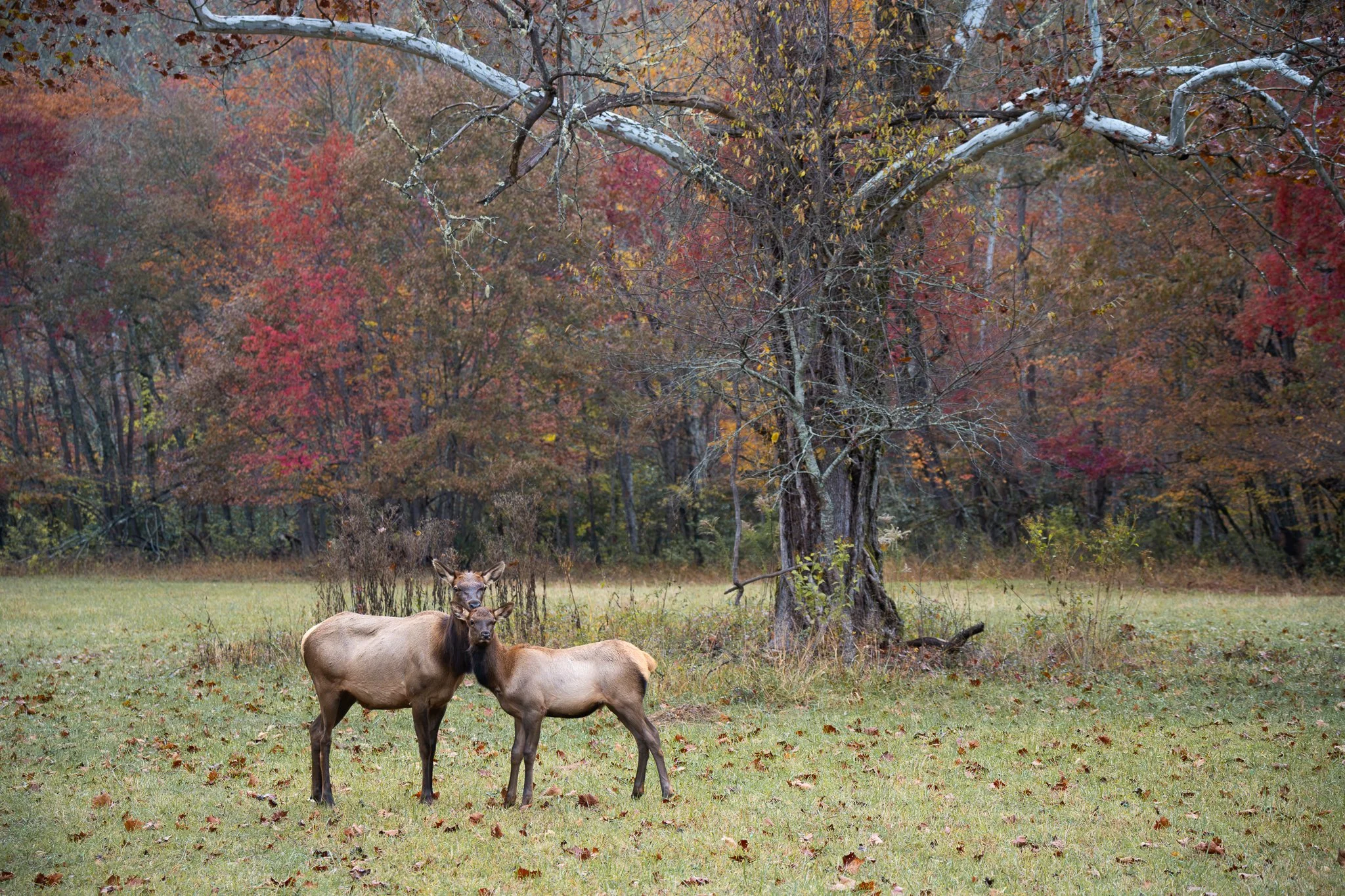
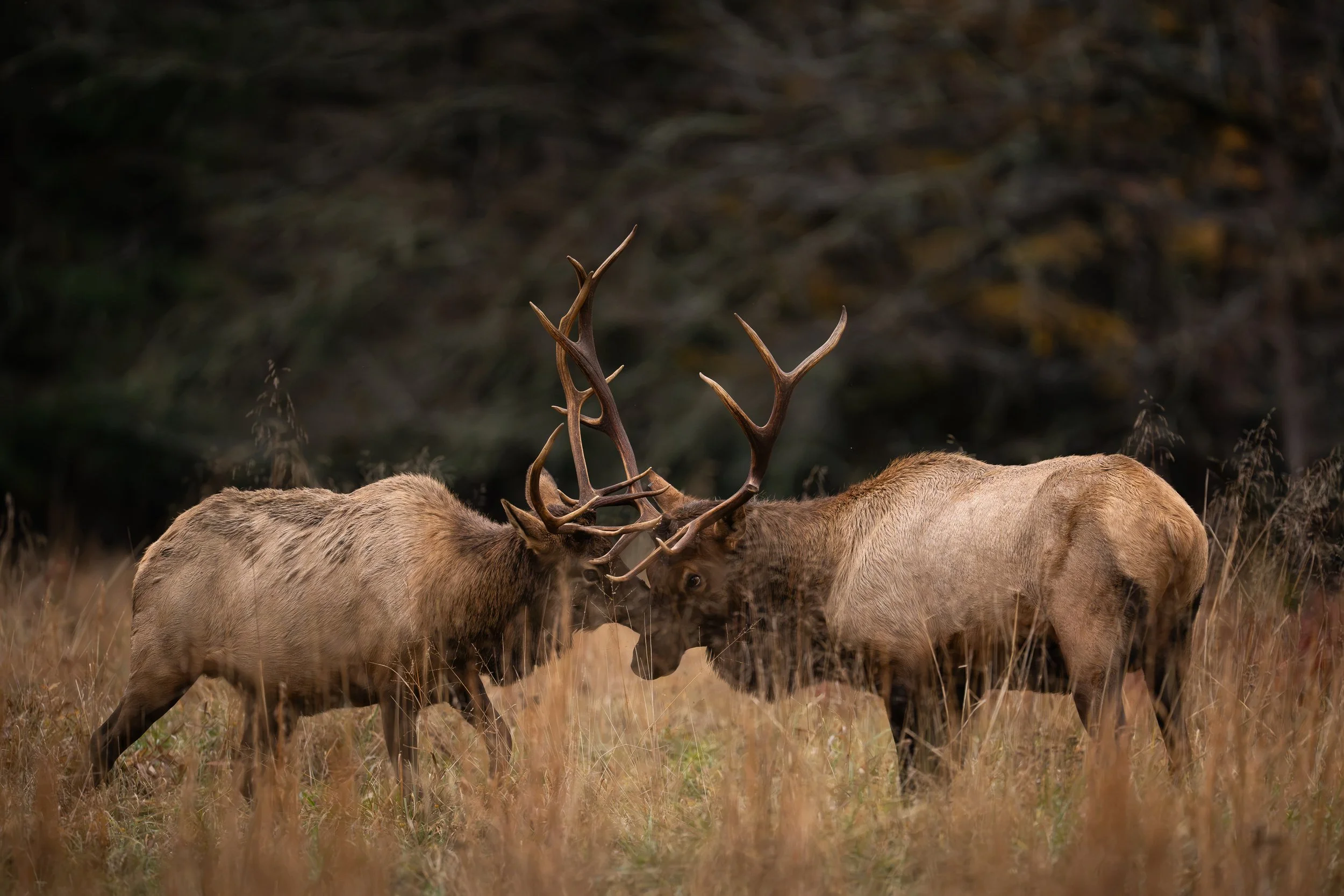
One evening in Tennessee, I had the opportunity to photograph two bull elk. It was toward the end of the rut, so they were a little more docile than they might have been a couple of weeks earlier. Fortunately, both were kind enough to pose for a few photographs.
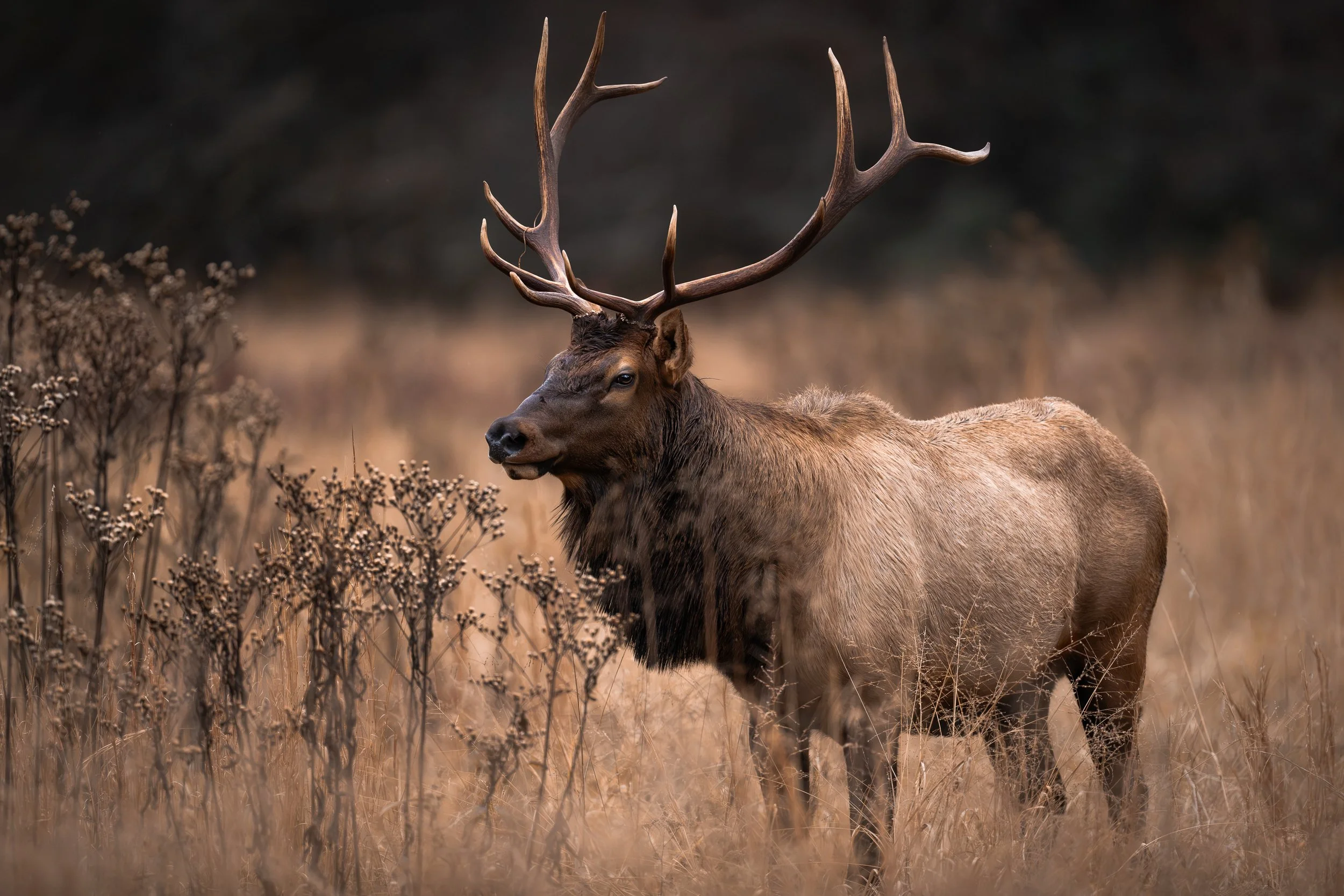
Bull Elk
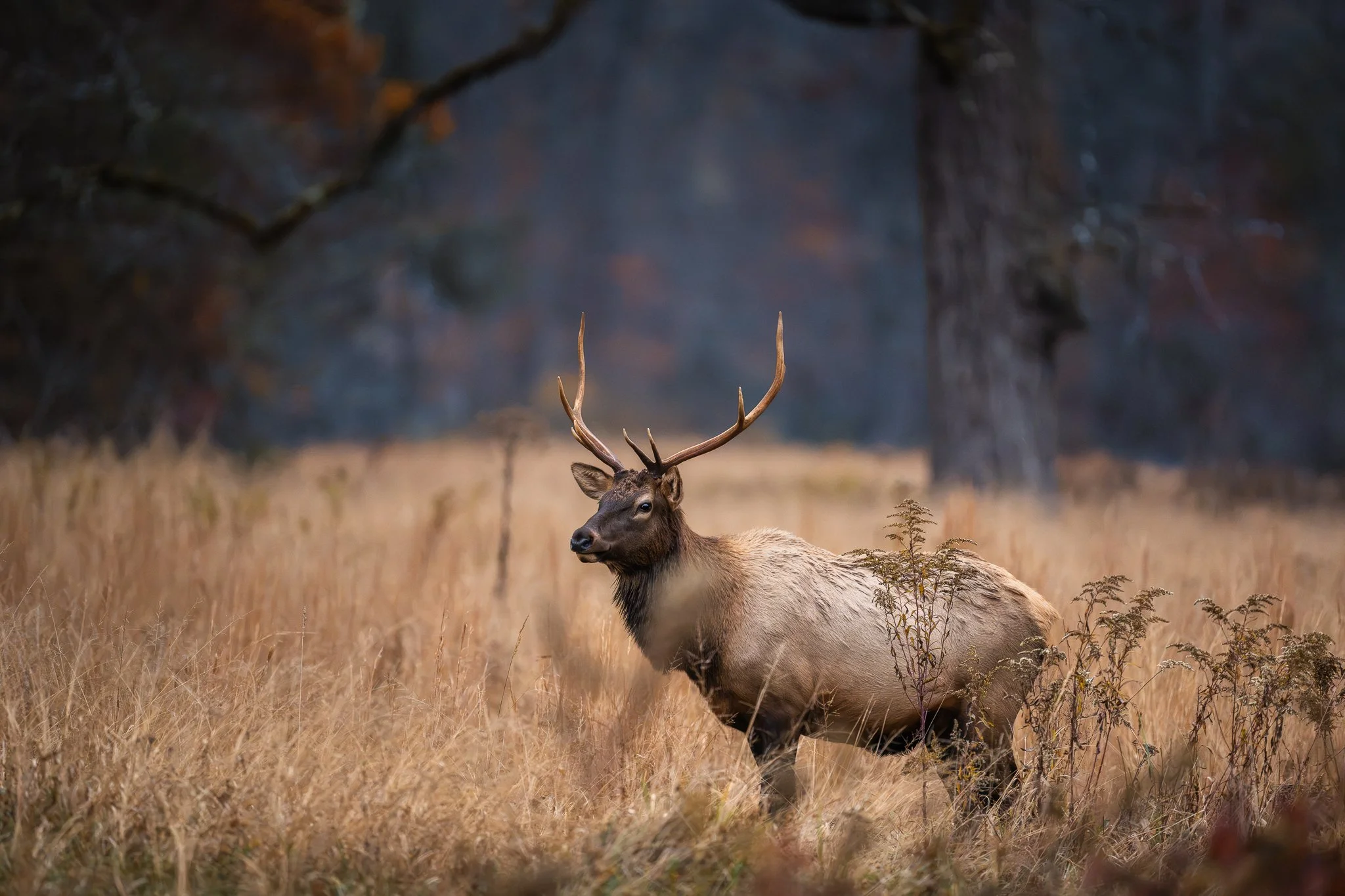
Young Bull Elk
While exploring the North Carolina side of the park, I also stopped at a waterfall that I've photographed on previous trips. This time, I chose a low, wide composition to capture the scene. There hadn't been much rain leading up to my visit, so the water flow was relatively light. I've seen this waterfall under much different conditions, and it's particularly impressive when there's more water flowing.
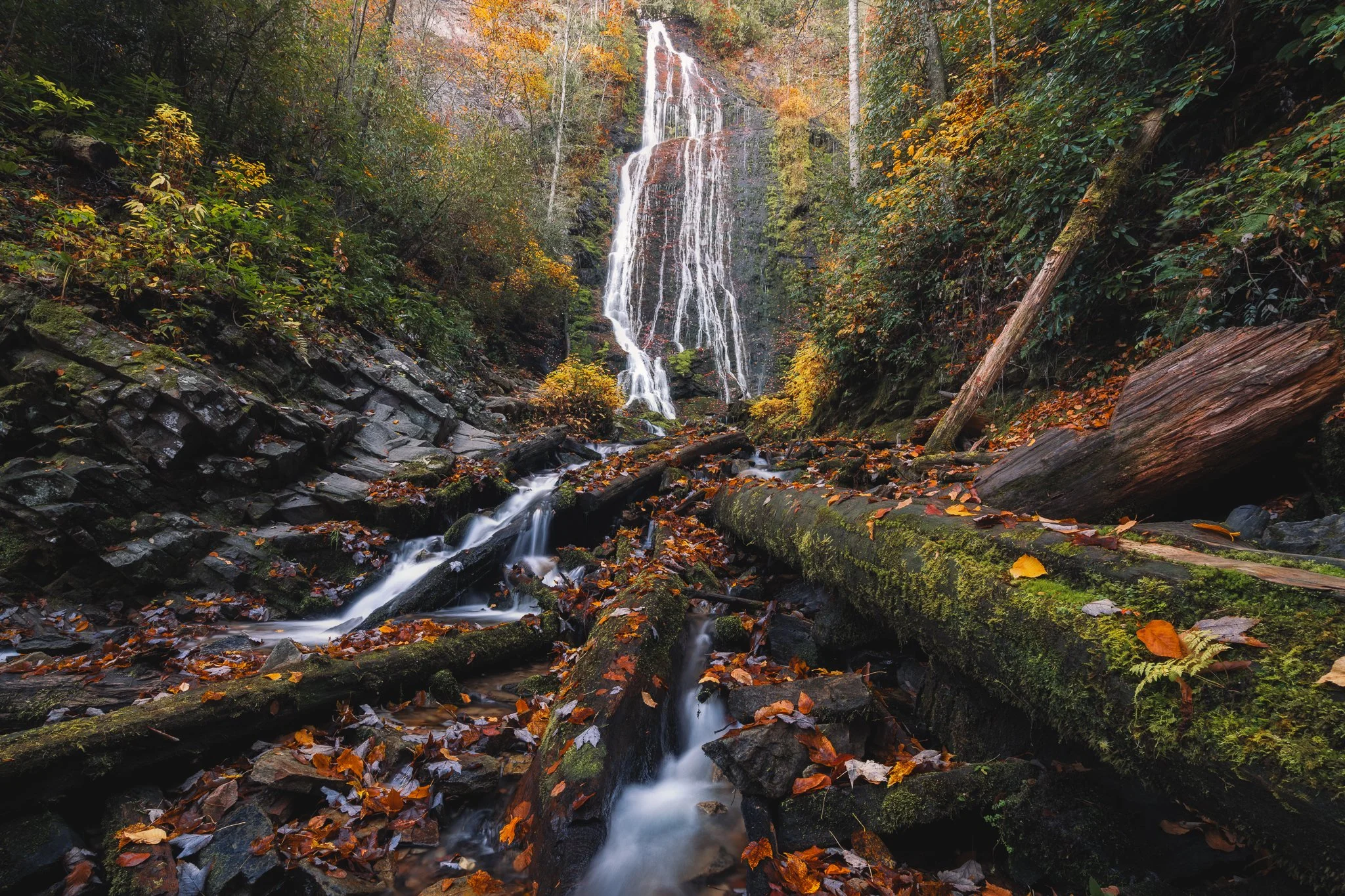
Mingo Falls
Overall Thoughts
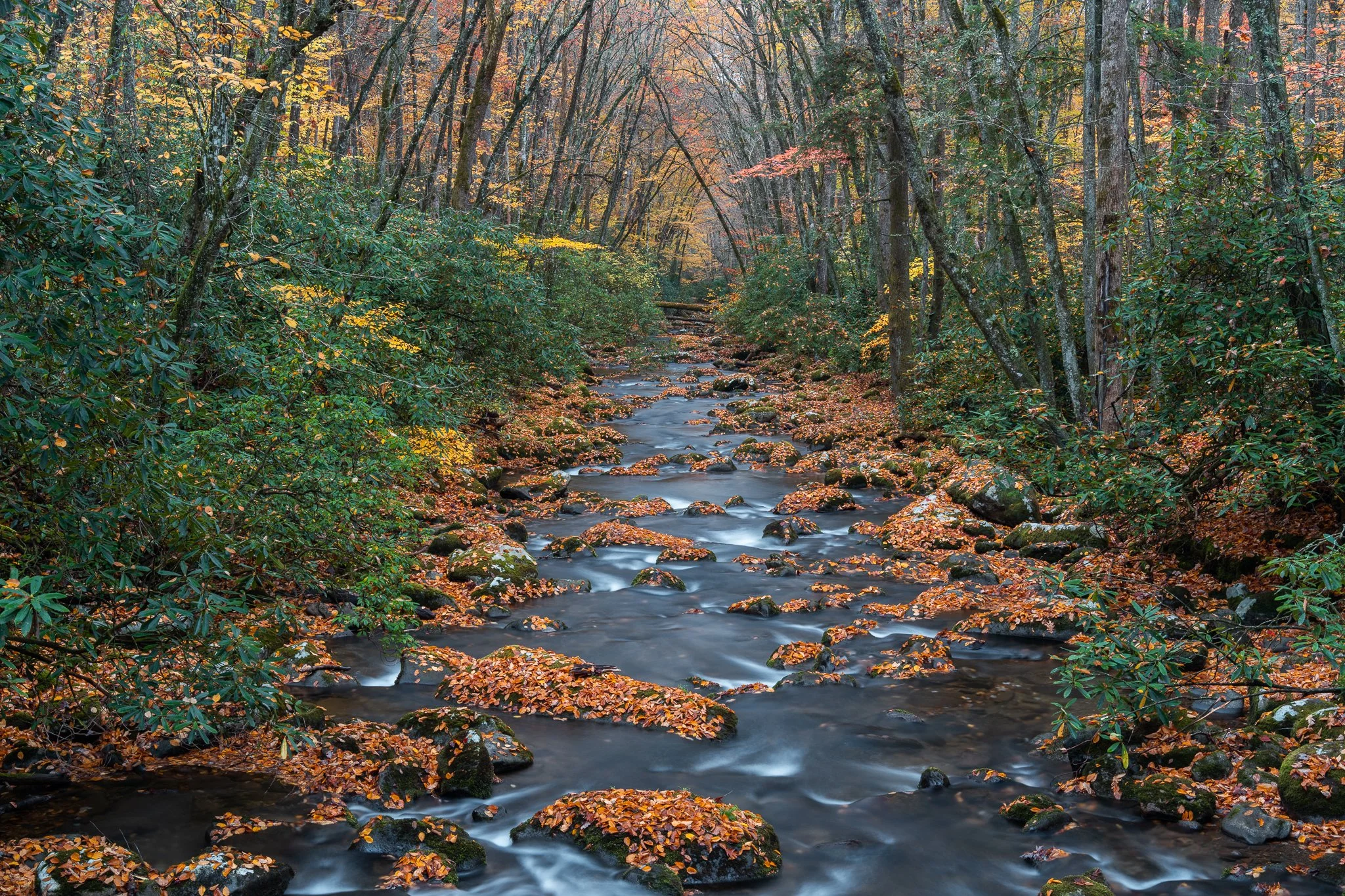
Overall, I was pretty satisfied with this year's fall trip. There were certainly areas that would have benefited from more foliage, but recent winds had already taken down what seemed like 80% of the leaves in some locations. I also wasn't able to photograph as many of the mountain creek scenes as I would have liked, which are always among my favorite subjects. I did manage to capture a few scenes along the creeks, along with some additional woodland compositions and wildlife photographs that helped round out the trip. I also had a chance to explore a couple of new areas while revisiting many of my favorite locations.
One of the most rewarding parts of this trip has been seeing how the photographs of these trees have turned out as finished prints. I selected Red River Etching fine art paper for these images, and I've been really pleased with how the paper brings out the details and adds depth to the photographs.
I'll be framing several of these prints over the next few days before bringing them to the gallery. For me, seeing the finished prints is one of the most satisfying parts of the entire photographic process.
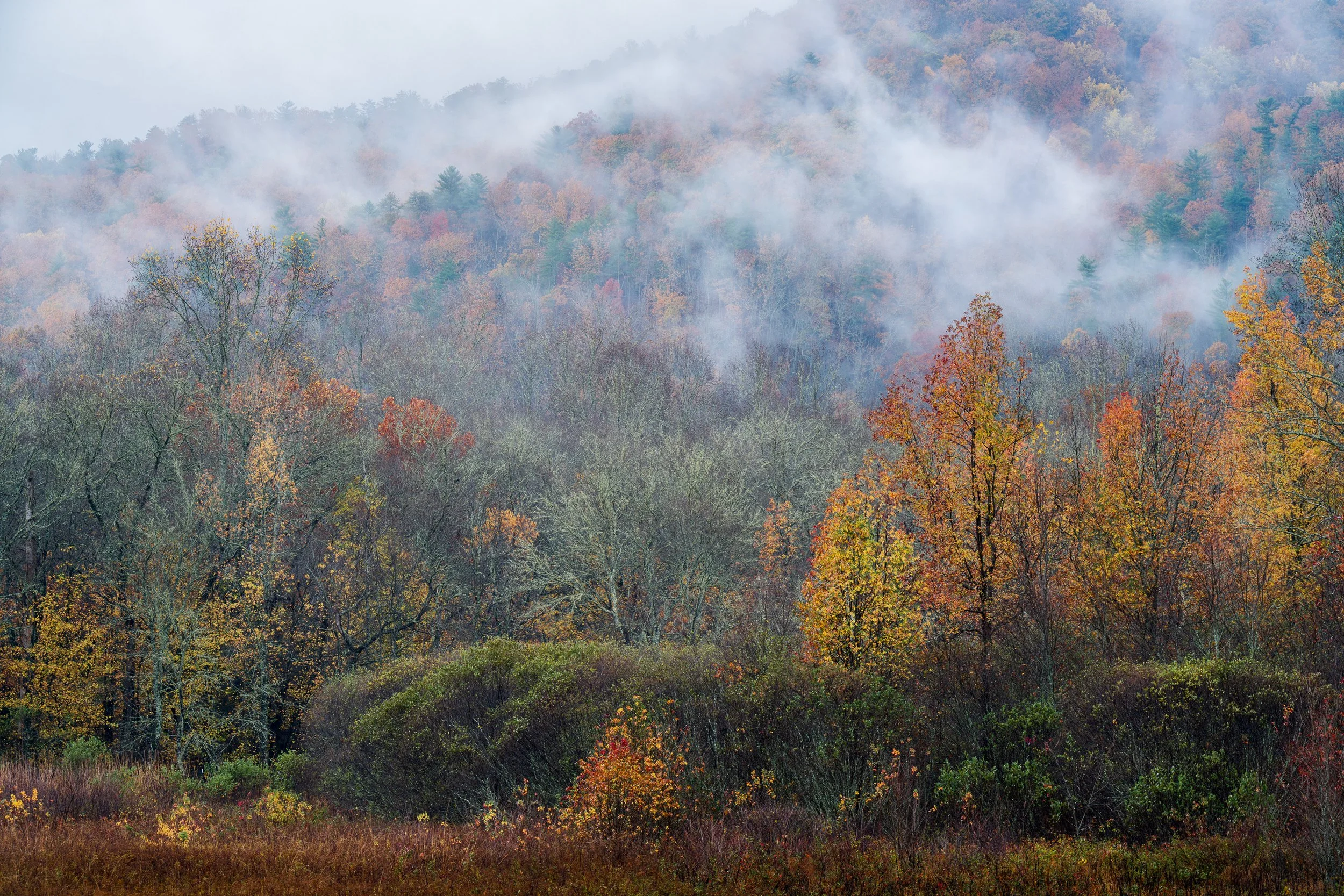
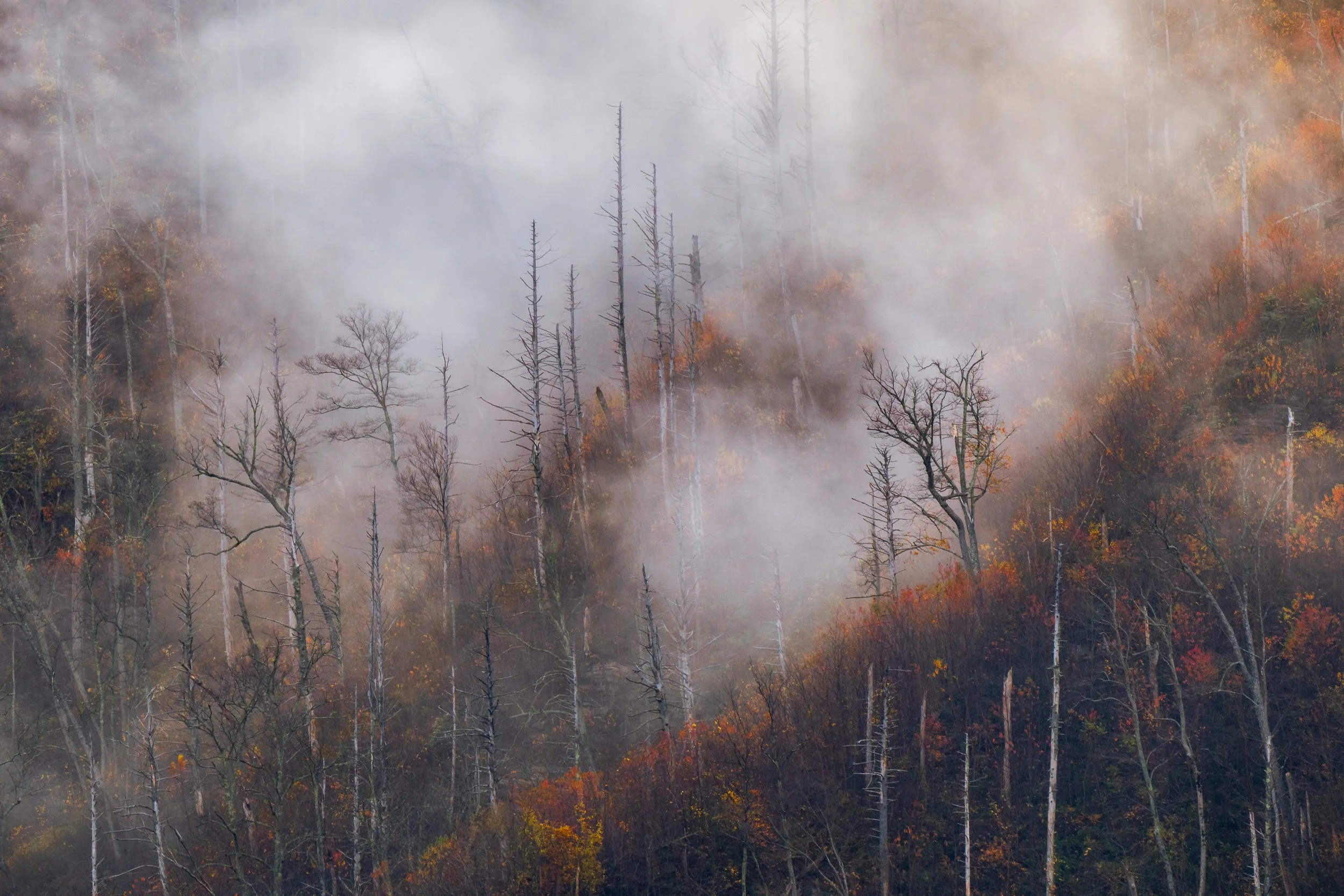
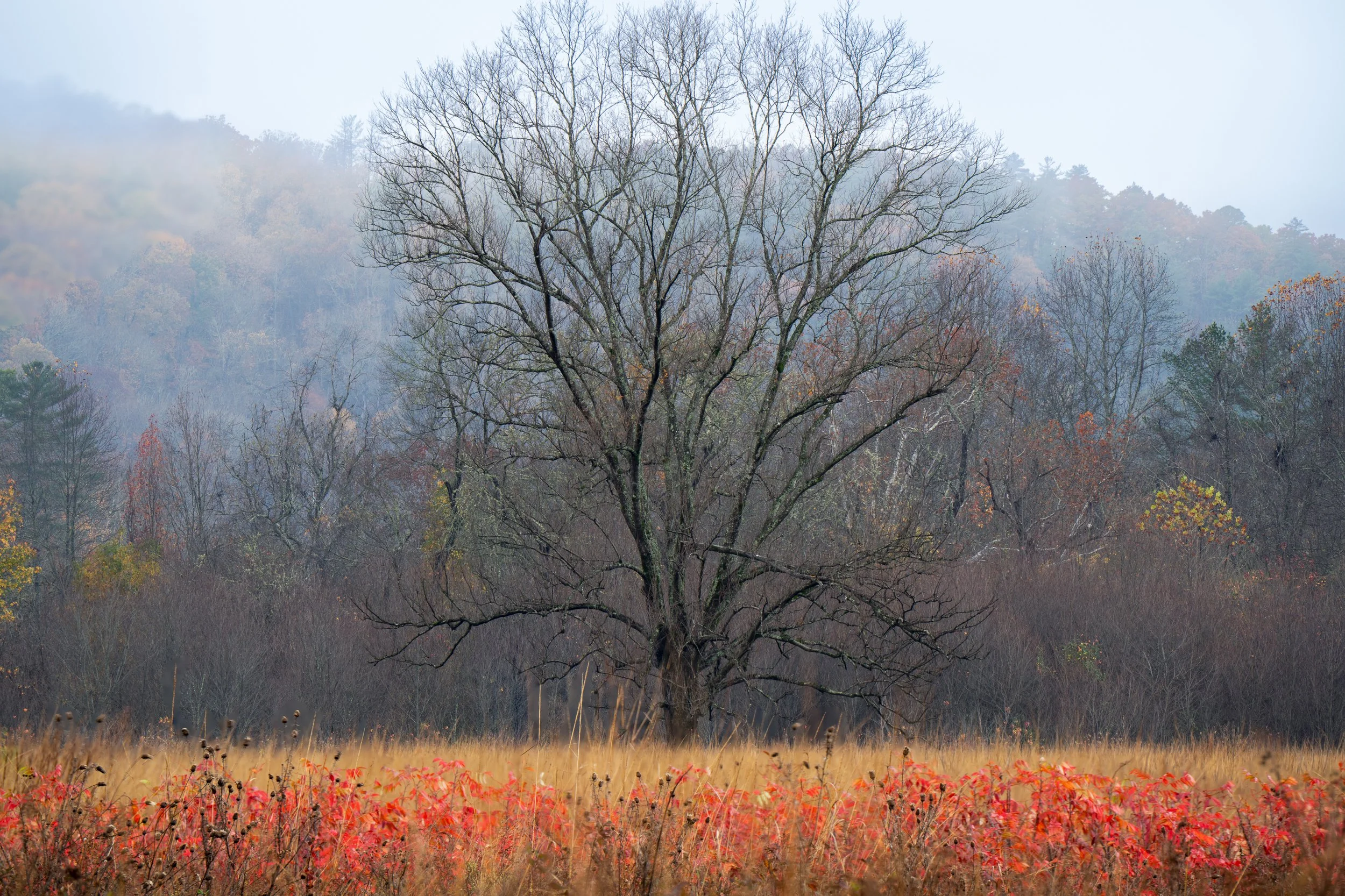
A Few More Scenes From the Smokies
Explore a Selection of my Fine Art Photography
A selection of my landscape and nature photography from the Great Smoky Mountains and throughout the Southeastern United States is available as fine art paper, metal, and canvas prints.